
 English
 Spanish
 French
 German
 Italian
 Chinese (Simplified)
 Japanese
 Korean
 Arabic
 Portuguese






 Send Inquiry
Ammonium Chloride
Ammonium Chloride Specification
- Solubility
- Easily soluble in water, slightly soluble in alcohol and acetone
- Purity
- 99% (Typical range: 98.5%-99.5%)
- Poisonous
- Yes
- Ph Level
- 4.5 - 5.5 (5% solution)
- Molecular Weight
- 53.49 g/mol
- Other Names
- Sal ammoniac
- HS Code
- 28271000
- Molecular Formula
- NH4Cl
- Form
- Solid
- Melting Point
- 338 °C (640 °F; 611 K)
- Shape
- Crystalline, powder, or granules
- Taste
- Salty, slightly bitter
- Storage
- Keep in a dry, well-ventilated area away from moisture
- Density
- 1.527 Gram per cubic centimeter(g/cm3)
- Structural Formula
- [NH4]+[Cl]-
- Smell
- Odorless
- Boiling point
- Decomposes before boiling
- Classification
- Inorganic Chemical
- Chemical Name
- Ammonium chloride
- CAS No
- 12125-02-9
- EINECS No
- 235-186-4
- Grade
- Industrial grade, Agricultural grade, Food grade
- Standard
- Conforms to GB/T 2946-2018 or equivalent
- Type
- Inorganic Salt
- Usage
- Industrial, agricultural, laboratory
- Main Material
- Ammonium chloride (NH4Cl)
- Application
- Used as a fertilizer, in dry cell batteries, and as a flux in metalworking
- Packing
- 25 kg or 50 kg PP/PE bags, jumbo bag on request
- Moisture
- 0.5% max
- Bulk Density
- ~900 kg/m3 (powder form)
- Stability
- Stable under normal conditions
- Decomposition
- Releases ammonia, nitrogen, and hydrogen chloride vapors
- UN Number
- Not classified as hazardous
- Appearance
- White crystalline solid
- Shelf Life
- 2 years under recommended storage
- Hazard Statements
- May cause eye, skin, and respiratory irritation
About Ammonium Chloride
Ammonium Chloride is extensively used in tanning of textiles, dyeing, formulation of cough syrups & tablets, galvanization of metal sheets and many more. This is prepared under the surveillance of the experienced professionals making use of quality tested ingredients and latest technology. As a result, we are known as a leading Manufacturer, Exporter, Trader and Supplier of the field. In addition to this, we offer this Ammonium Chloride at most affordable prices to our clients. Due to all, we are reckoned as a leading company.
Features:
- Non-toxic
- Cost effective
- Efficient performance
- Eco-friendly
Specifications:
| Molecular Formula | NH4Cl |
| Molecular Weight | 53.49 |
| Description | Colorless Crystals Or White , Fine Or Coarse , Crystalline Powder, Somewhat Hygroscopic, |
| Solubility | Freely Soluble In Water And In Glycerin, And More So In Boiling Water, Sparingly Soluble In Alcohol |
| Identification | Ammonium And Chloride =+Ve |
| Ph Of 5% Solution | 4.6 - 6.0 |
| Loss On Drying Over Silica Gel For 4 Hrs | Max. 0.5% |
| Residue On Ignition | Max. 0.1% |
| Thio-cyanate | PER USP |
| Heavy Metals | Max 0.001% |
| Residual Solvents | Per USP |
| Assay On Dry Basis | 99.5--100.5% Of Nh4cl |
Versatile Industrial and Agricultural Uses
Ammonium Chloride serves multiple industries, functioning as a nitrogen source in fertilizers, a flux in metalworking for soldering and galvanizing, and an electrolyte component in dry cell batteries. Its reliable chemical properties and high purity make it indispensable in laboratories and various industrial processes.
Secure Packing and Storage Recommendations
This product is delivered in durable 25 kg or 50 kg PP/PE bags, with jumbo bags available upon request. For maximum shelf life, it should be stored in a dry, well-ventilated environment and kept away from sources of moisture. Proper handling ensures the compound remains stable and effective for two years.
FAQs of Ammonium Chloride:
Q: How should Ammonium Chloride be safely stored and handled?
A: Store Ammonium Chloride in a dry, well-ventilated area, away from moisture and direct sunlight. Use appropriate personal protective equipment to avoid skin, eye, and respiratory irritation, and always seal the packaging after use to maintain product integrity.Q: What are the main applications of Ammonium Chloride?
A: Ammonium Chloride is widely used as a fertilizer in agriculture, as a flux in metalworking, and as an electrolyte in dry cell batteries. It is also valued in laboratories and as a food additive in food-grade forms.Q: When does Ammonium Chloride begin to decompose, and what does it release?
A: Ammonium Chloride decomposes at approximately 338C (640F), releasing ammonia, nitrogen, and hydrogen chloride vapors during this process. It does not boil but breaks down when subjected to high temperatures.Q: Where is Ammonium Chloride commonly utilized?
A: It is used globally across agricultural sectors for crop nutrition, in various industrial settings for metal processing and battery production, and in laboratories for chemical synthesis and testing processes.Q: What is the process for applying Ammonium Chloride as a fertilizer?
A: For agricultural use, Ammonium Chloride is typically spread onto soil as a source of nitrogen for plants. Application rates depend on crop requirements and soil conditions; it should be incorporated into the soil or diluted as recommended for optimal uptake.Q: What are the benefits of using Ammonium Chloride in industry and agriculture?
A: Ammonium Chloride enhances crop yield by providing essential nitrogen and improves metal bonding in industrial processes. Its high solubility, purity, and stability make it a reliable choice for diverse applications.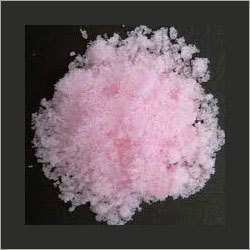
Tell us about your requirement

Price:
Quantity
Select Unit
- 50
- 100
- 200
- 250
- 500
- 1000+
Additional detail
Mobile number
Email

More Products in Inorganic Chemical Compound Category
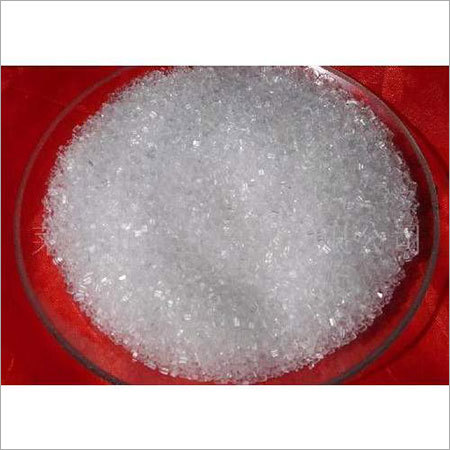
Magnesium Sulphate
Usage : Used as a drying agent, laxative, brewing salt, bath additive
Grade : Other, Technical, Industrial, Pharmaceutical, Food
Form : Other, Crystalline, Powder, Granules
Solubility : Very soluble in water, slightly soluble in alcohol
Ammonium Chloride- IP/BP/EP/USP
Usage : Used in making dry cell batteries, pharmaceuticals, textile printing, metalwork, as a food additive and laboratory reagent
Grade : Other, IP/BP/EP/USP
Form : Other, Powder / Crystals
Solubility : Easily soluble in water
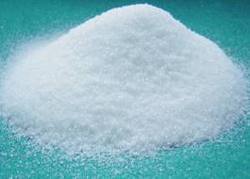
Anhydrous Citric Acid -IP/BP/EP/USP
Usage : As acidulant, preservative, sequestrant
Grade : Other, IP/BP/EP/USP
Form : Powder
Solubility : Freely soluble in water, sparingly soluble in ethanol (96%)
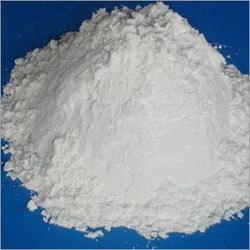
Calcium Carbonate-IP/BP/EP/USP
Price 138 INR / Kilograms
Minimum Order Quantity : 50 Kilograms
Usage : Industrial
Grade : Industrial Grade
Form : Powder
Solubility : Insoluble In Water

Contact Details
- Survey No 258/1, Opp. Raj Ind Estate, Samlaya Road, Karchiya,Vadodara - 391520, Gujarat, India
- oasisfinechem1@yahoo.in
 Send Inquiry
- Phone :91--7984442810




 |
OASIS FINE CHEM
All Rights Reserved.(Terms of Use) Developed and Managed by Infocom Network Private Limited. |
