
 English
 Spanish
 French
 German
 Italian
 Chinese (Simplified)
 Japanese
 Korean
 Arabic
 Portuguese



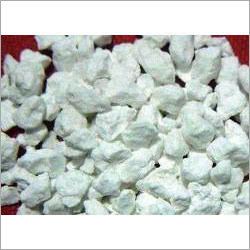
Barium Chloride
Product Details:
- Structural Formula Cl-Ba-Cl
- HS Code 28273990
- Melting Point 963 °C
- Purity 98% Min (varies with grade)
- Storage Keep container tightly closed in a dry and well-ventilated place. Store away from acids and moisture.
- Shape Crystal, Powder, or Granular
- Poisonous Yes
- Click to view more
X
Barium Chloride Product Specifications
- Freely soluble in water, insoluble in alcohol
- Used in manufacturing of pigments, heat treatment of metals, production of barium salts, fireworks, laboratory reagent
- Barium Chloride
- Barium dichloride, Barium Chloride Anhydrous, Barium Chloride Dihydrate
- Yes
- Inorganic Compound
- Barium Chloride
- Odorless
- Keep container tightly closed in a dry and well-ventilated place. Store away from acids and moisture.
- 98% Min (varies with grade)
- Meets industrial/laboratory standards
- Crystal, Powder, or Granular
- Cl-Ba-Cl
- 28273990
- 963 °C
- 10361-37-2
- 208.23 g/mol
- Technical Grade, Industrial Grade
- 1,560 °C (decomposes)
- 3.856 Gram per cubic centimeter(g/cm3)
- Bitter, Saline
- Neutral (pH 7 for 10% solution)
- 233-788-1
- Industrial, Laboratory and Research
- BaCl2
- Anhydrous or Dihydrate, Solid
- Inorganic Salt
- Above 963C (releases toxic fumes)
- Stable under recommended storage conditions
- Toxic (T), Irritant
- Barium Chloride Dihydrate contains two water molecules
- 25kg/50kg bags or as per client requirement
- White crystalline solid
- 2 years under proper storage
- 1564
- Non-flammable
Product Description
Barium Chloride is known for its high purity, effectiveness, seamless quality, dependability and longer shelf life. Our experienced professionals prepare this using tested ingredients also in tandem with latest parameters of the field. Thus, we are known as a market centric Manufacturer, Exporter, Trader and Supplier. Due to all, it is hugely in demand. In addition to this, our prestigious customers can avail Barium Chloride in various packaging options at comprehensive prices. Features and specifications of the product are given below:
- Noted quality
- Admired purity
- Long shelf life
- Effective
- Salt
- Fireworks
- Color Agents
- Pyro techniques
- Glass industry
Specifications
| Synonym » | BARIUM (II) NITRATE |
| CAS No. » | 10022-31-8 |
| Molecular Formula » | Ba(NO3)2 |
| Molecular Weight » | 261.35 |
| Description » | WHITE CRYSTALLINE POWDER |
| SOLUBILITY | SOLUBLE IN WATER |
| PH OF 5% SOLUTION | 5.0-8.0 |
| INSOLUBLE MATTER | MAX. 0.01% |
| CHLORIDE | MAX. 0.0005% |
| CALCIUM | MAX. 0.05% |
| POTASSIUM | MAX. 0.005% |
| SODIUM | MAX. 0.005% |
| STRONTIUM | MAX. 0.1% |
| HEAVY METALS | MAX. 0.0005% |
| IRON | MAX. 0.0002% |
| ASSAY | MIN 99.0% |
Key Properties
Barium Chloride exhibits notable characteristics such as high water solubility and stability under recommended storage conditions. Its crystalline appearance, odorless nature, and neutral pH make it suitable for various applications. The compound decomposes above 963C, releasing toxic fumes, and is non-flammable. When stored away from acids and moisture in tightly closed containers, it maintains a shelf life of up to two years.
Wide-Ranging Applications
Used extensively across industries, Barium Chloride is integral in pigment manufacturing, metal heat treatment, production of barium salts, and fireworks. Its technical and industrial grades support laboratory research and industrial processes. Its reliability and standardized purity deliver consistent results for laboratories, manufacturers, and exporters.
Safe Handling and Storage
Given its toxic and irritant classification, Barium Chloride requires careful handling. Protective equipment should be worn, and it should be stored in dry, well-ventilated areas, away from acids and moisture. Following recommended safety practices helps ensure safe usage while preserving its effectiveness and shelf life.
FAQs of Barium Chloride:
Q: How should Barium Chloride be safely stored to maintain its stability and shelf life?
A: Barium Chloride should be kept in tightly closed containers stored in dry, well-ventilated areas away from acids and moisture. Proper storage following these guidelines ensures its stability and up to two years of shelf life.Q: What are the main industrial applications of Barium Chloride?
A: Barium Chloride is widely used in pigment manufacturing, metal heat treatment, production of barium salts, fireworks, and as a laboratory reagent. Its versatility supports numerous industrial processes and research activities.Q: When does Barium Chloride decompose, and what happens during decomposition?
A: Barium Chloride decomposes at temperatures above 963C, releasing toxic fumes. Handling at high temperatures should be avoided to prevent hazardous exposure.Q: Where is Barium Chloride typically supplied from and in what packaging formats?
A: Barium Chloride is commonly supplied by manufacturers, exporters, and suppliers, particularly in India, and is packaged in 25kg or 50kg bags, with options to meet client-specific requirements.Q: What precautions should be taken due to Barium Chlorides toxic nature?
A: Due to its classification as toxic and irritant, protective gloves, eyewear, and masks should be worn during handling. Avoid ingestion, inhalation, and skin contact, and ensure adequate ventilation in work areas.Q: How is Barium Chloride beneficial in laboratory and industrial settings?
A: Barium Chlorides high purity and solubility in water enable precise chemical reactions and reliable results in laboratory experiments and industrial manufacturing, supporting a range of applications from pigment production to metal treatment.Tell us about your requirement

Price:
Quantity
Select Unit
- 50
- 100
- 200
- 250
- 500
- 1000+
Additional detail
Mobile number
Email

Other Products in 'Barium Compounds' category

Contact Details
- Survey No 258/1, Opp. Raj Ind Estate, Samlaya Road, Karchiya,Vadodara - 391520, Gujarat, India
- oasisfinechem1@yahoo.in
 Send Inquiry
- Phone :91--7984442810




 |
OASIS FINE CHEM
All Rights Reserved.(Terms of Use) Developed and Managed by Infocom Network Private Limited. |
